

Roofing Material Disposal Services
WG Waste supplies roll-off containers for roofing material disposal across metro Atlanta, so tear-off shingles, underlayment, flashing, and decking leave the job site in a single load. A container staged at the house keeps the yard clear and the crew moving.

 154 reviews
COMMITTED TO RESPONSIBLE DISPOSAL
ROOFING MATERIAL DISPOSAL IN METRO ATLANTA
WHAT ROOFING MATERIAL DISPOSAL COVERS
A roofing container takes everything a tear-off produces: asphalt shingles, felt and synthetic underlayment, ice and water shield, drip edge and metal flashing, vent boots, nails, and old plywood decking. Roofing contractors in Marietta, homeowners replacing storm-damaged shingles in Roswell, and property managers re-roofing a multi-unit building all use the same containers. What does not belong in a roofing load matters as much as what does. Paint, solvents, and roofing cements or sealants that are still liquid are never accepted, and mixing in household trash or unrelated demolition debris changes how the load is handled. Homes built decades ago may have older roofing or underlayment that needs to be tested before removal, so raise that early in the planning. A clean roofing load keeps disposal predictable from the first bundle off the roof to the last pickup.
HOW A ROOFING CONTAINER IS QUOTED
Four things move a roofing disposal quote. Container size comes first, and it follows the roof: the square footage, the pitch, and the number of layers coming off. Weight comes second, and shingles are far heavier than they look, with a single layer commonly running a couple of hundred pounds per roofing square, so a roof can reach several tons well before a large container is full. Third is how long the container stays on site, since a two-day tear-off needs a different window than a re-roof with decking repairs and weather delays. Fourth is what is going in. A shingles-only load is handled differently from one that also contains decking, gutters, or siding. Placement near the house and the angle the crew will use to throw debris round out the picture.
Which Service Is Right For You
WG Waste is your locally owned and operated dumpster rental service provider. We offer dumpster rentals and commercial front load bin services, including our specialized Sunday Front Load Service for businesses that need weekend waste management solutions. No job is too big for us to handle! If you have any questions, please give us a call at (404) 709-8898.

ROLL OFF DUMPSTERS
- Appliance & Bulky Item Disposal
- Foreclosure Clean Outs
- Construction Waste Removal
- Furniture Disposal
- E-waste Disposal
- Yard Waste and Landscaping Debris
- Remodeling Projects
- Roofing Material Disposal
- Garage and Attic Cleanouts

Front Loader Bins
- Commercial Garbage Disposal
- Short/Long Term Business Events
- Daily or Weekly Calendar Pickups
- Recycling Service Available
- Shared Commercial Spaces
- Restaurants and Food Establishments
- Retail and Shopping Centers
- Apartment Complexes
- Office Buildings and Coworking Hubs
ROOFING MATERIAL DISPOSAL ACROSS METRO ATLANTA
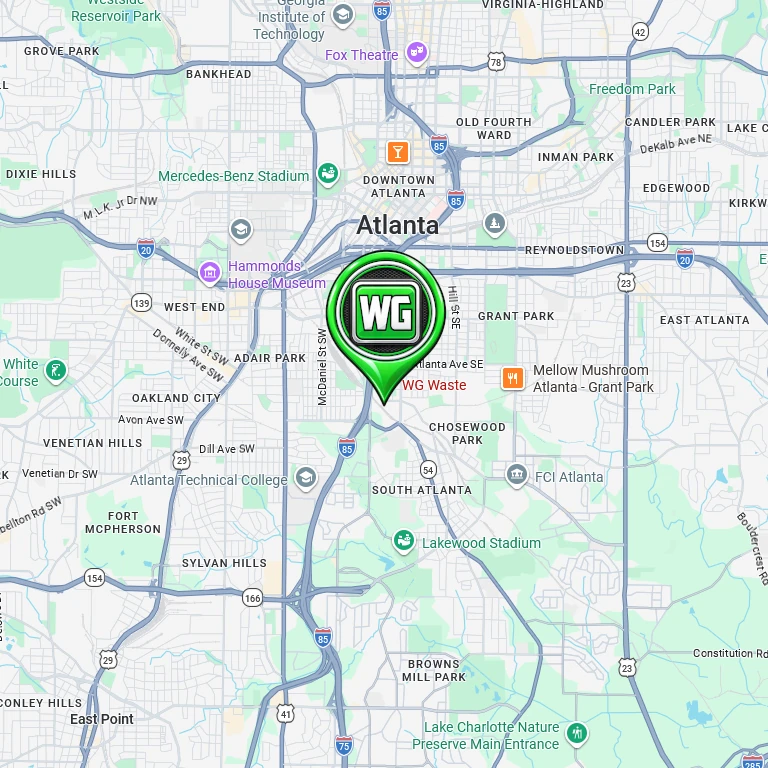
Roofing work in the metro area follows the weather and the age of the housing stock. Storm seasons and hail bring waves of replacement jobs across Cobb, Gwinnett, and North Fulton. Older neighborhoods in Decatur, Smyrna, and East Point see re-roofs on homes that have been through more than one layer. Commercial flat roofs and apartment communities near Stone Mountain and Clayton County need containers staged for a full building. WG Waste places roofing disposal containers across Fulton, Cobb, Gwinnett, Clayton, and Henry counties, and works with roofing contractors, property managers, and homeowners on the same equipment. City-specific detail lives on the pages linked below, and the full coverage map sits on our service areas page. To get a container scheduled, use the booking link at the top of this page.
Container Placement for Roofing Jobs
For a tear-off, the container should sit as close to the roof edge as the site allows so debris does not have to be carried across the yard. We confirm the placement spot before delivery, review the truck approach for low limbs and overhead lines, and put boards under the rails on driveways that need protecting. Keeping the area below the working side clear of cars and landscaping protects both.
Re-roofing a home in a tight subdivision or a property with HOA rules about driveway or street placement? Tell us when you schedule so placement is cleared ahead of the drop.
Main Items We Collect


- Attics: Old Boxes and Storage
- Containers
- Garages: Seasonal Decorations
- Old stuff: Sporting Equipment
- Old Toys and Games
- Books and Magazine boxes
- Sofas and Couches
- Mattresses and Bed Frames
- Tables and Chairs
- Dressers and Wardrobes
- Entertainment Centers
- Televisions
- Computers and Laptops
- Printers and Scanners
- Monitors
- Gaming Consoles
- Wood Scraps and Lumber
- Roofing Shingles
- Drywall and Plaster
- Concrete and Bricks
- Metal and Aluminum Scraps
- Yard Waste and Clippings
- Old Fencing
- Patio Furniture
- BBQ Grills
- Garden Tools and Equipment
- Desks and Office Chairs
- Filing Cabinets
- Office Electronics (fax machines, copiers)
- Cubicle Partitions
- Conference Tables
- Refrigerators and Freezers
- Washers and Dryers
- Stoves and Ovens
- Microwaves
- Dishwashers


How Our Company Stands Out

Same Day Service
We offer fast and reliable dumpster rental and front load service.

Responsible Solutions
Committed to sustainability, we prioritize recycling and responsible disposal.

Flexible Scheduling
We make it easy to book dumpster rentals and front-load services.

Speed, Efficiency, & Reliability
Our team is ready to respond promptly during business hours.

Local Business, Licensed & Insured
We prioritize recycling options to minimize landfill impact.

Locally Owned & Operated
Roofing Material Disposal Questions
Common questions about roofing debris containers in metro Atlanta
Asphalt shingles, underlayment, flashing, drip edge, vent boots, nails, and old decking are the typical contents of a tear-off. The container should not receive paint, solvents, liquid sealants, or household trash.
Shingles are dense. A single layer commonly weighs a couple of hundred pounds per roofing square, so a full roof can reach several tons. That is why the size you order is often smaller than the volume of the debris suggests.
Extra layers add weight and volume quickly. Tell our team how many layers are coming off so the container is sized and the weight is planned for before the job starts.
Homes and commercial roofs from earlier decades may contain older materials that should be tested before removal. If there is any question, have the material tested first and let our team know the result when you book.
It depends on the roof size, pitch, and layers. Our team will size it with you based on the job description, and we may suggest a container sized more by weight than by volume.
Yes. WG Waste places containers throughout the metro area, including Fulton, Cobb, Gwinnett, Clayton, and Henry counties, along with the surrounding communities listed on our service areas page.
Typically the driveway, as close to the roof edge as the truck can reach. We lock in the spot before delivery, review the truck approach and any overhead limbs or lines, and protect the surface with boards under the rails.